
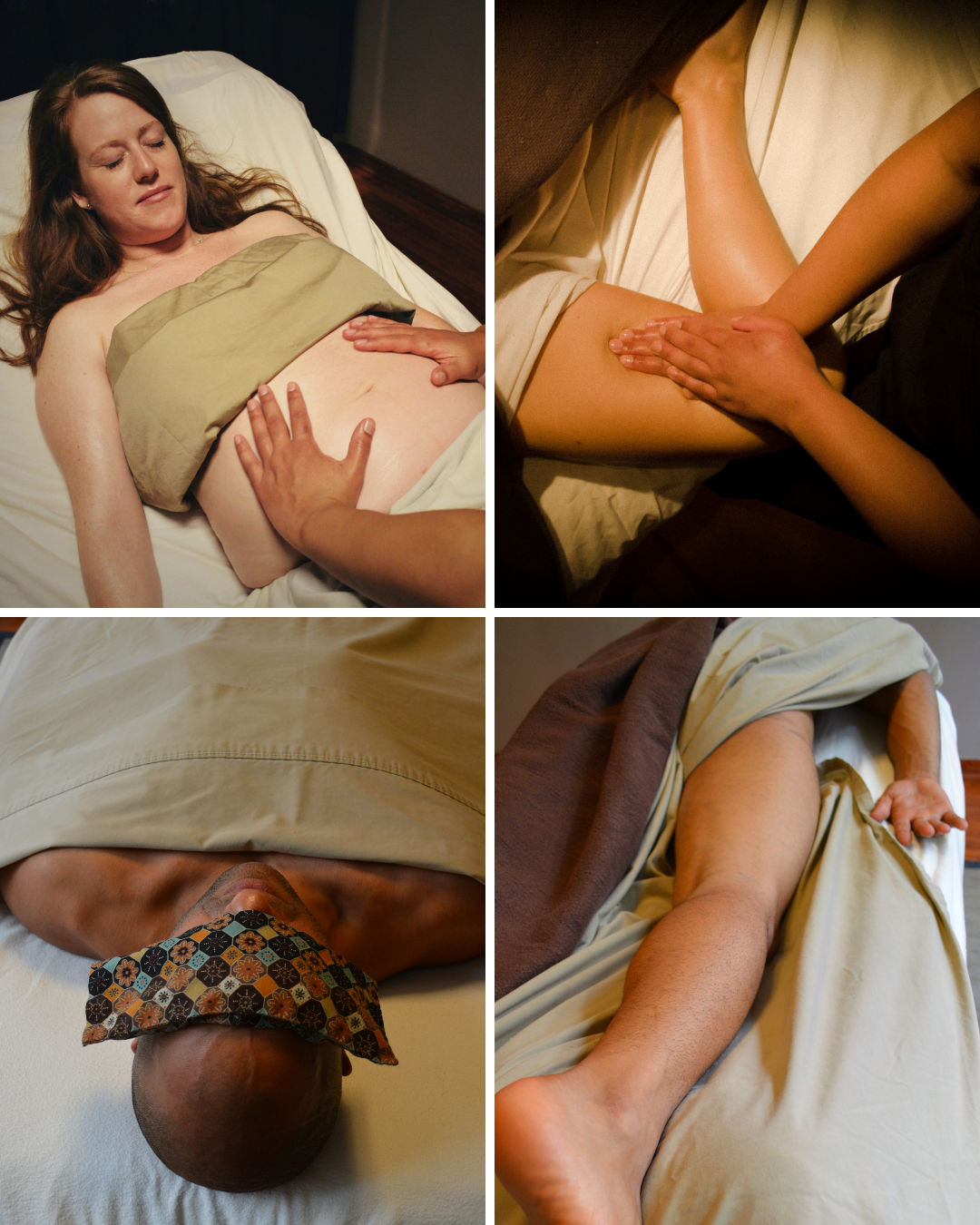
Clean, well-executed draping is both a professional standard and part of the overall experience of care.
What is draping?
Draping is the method of using sheets or coverings to keep the body appropriately covered during a session while exposing only the area being worked.
Draping Matters More Than You Realize
Clean, well-executed draping is both a professional standard and part of the overall experience of care—it shapes how comfortable a client feels and how seamlessly the session can unfold.
In practice, draping is one of the most defining elements of a session. Aside from keeping the body warm, the sheets foster a sense of comfort and trust. Draping is non-verbal communication between client and practitioner that says: this is the area being addressed, and you will not be exposed unnecessarily.
A Foundation of Safety and Trust
Clean, tight draping supports trust in a very tangible way. Sheets that are secure and well-placed remove uncertainty. There’s no second-guessing what might be exposed, no need to hold tension in anticipation. The body can settle.
Loose or careless draping does the opposite. Even if nothing inappropriate happens, the possibility of exposure can keep the nervous system slightly activated. Subtly, but enough to limit how deeply the client can relax.
I talk about nervous system care. Draping is part of that. Each adjustment of the sheet is a moment of contact. It can feel abrupt or it can feel considered. It can feel like something being done to you, or something that’s part of a coherent, respectful process.
Predictability matters. When transitions are smooth, when the sheet moves in a way that feels contained and intentional, the body stays regulated. There’s no abrupt exposure, no fumbling or hesitation. Draping done well communicates safety. The client doesn’t have to think, monitor, or brace.
Precision Creates Possibility
Secure, intentional draping also determines how effectively I can move work. It’s not just about coverage. It’s about clarity, precision, and care.
When the sheet is anchored properly, I can work unencumbered. No adjusting and fumbling with a loose sheet; I can move limbs into stretches and different positions without worry of accidental exposure. I can expose exactly what I need, when I need it, without disrupting the rest of the body. Transitions become fluid. The session maintains continuity.
Clean draping allows for:
Clear access to specific areas without overexposure
Smooth transitions between regions of the body
A grounded, uninterrupted flow to the session
The Detail That Changes Everything
Clients aren’t always aware of the importance of draping, but when it’s done well they feel the difference immediately. Tight, intentional draping honours the body as a whole, even when only one area is being worked. Nothing is incidental. Nothing is left to chance.
For me, draping is as important as any other aspect of the session. Everything is intentional and has the nervous system top of mind. Not as an afterthought—but as part of the work itself.
Secure draping helps you relax, breathe, and let go.