
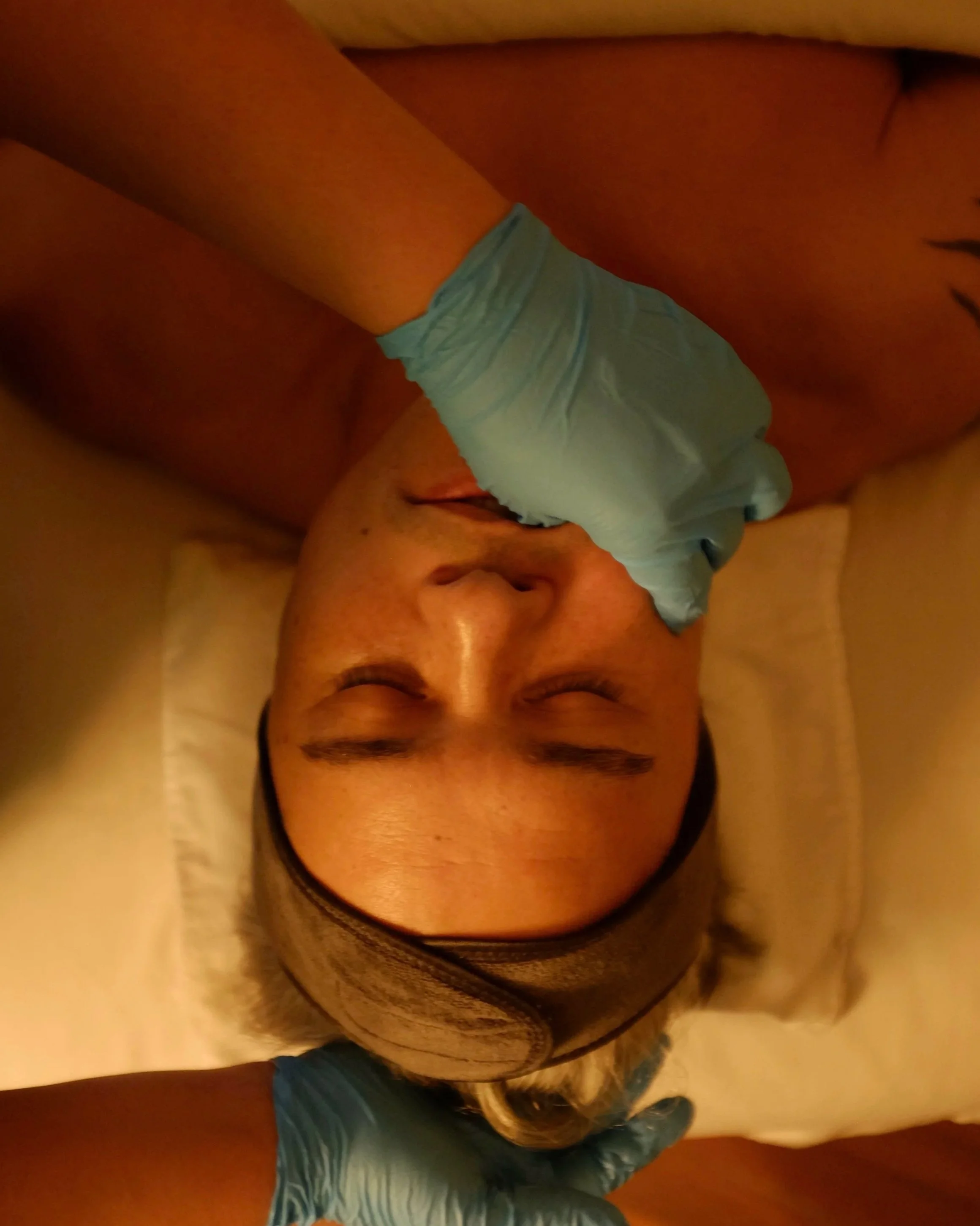
Why work inside the mouth?
For many people, this is where long-standing tension is held. Most approaches to jaw tension focus on external muscles—the jawline, temples, and neck. While that work is important, it doesn’t always reach the deeper structures involved in clenching, grinding, and TMJ discomfort. Working from the inside creates a more complete picture of what is happening in the jaw.
Buccal therapy allows direct access to muscles that:
are responsible for closing and stabilizing the jaw
contribute to clenching and grinding patterns
can remain tight even when external work has been done
What muscles are being addressed?
Buccal therapy primarily works with:
Masseter – one of the main chewing muscles, often thickened and overactive in people who clench or grind
Medial pterygoid – located inside the jaw, working with the masseter to close the mouth
Buccinator – the muscle of the cheek, which can hold tension and affect how the jaw and face move
Surrounding connective tissue and fascial layers within the cheeks
These muscles are difficult to access externally with the same level of specificity.
How it works
One hand is placed inside the mouth (with gloves), while the other supports externally. This allows me to feel the tissue from both sides and work with precision.
Pressure is controlled and responsive. The goal is not to push through tension, but to meet it and allow it to change.
Sessions are always guided by feedback and pacing. You are not expected to tolerate discomfort or “push through” the experience.
What it helps with
Buccal therapy can be particularly effective for:
jaw tension and chronic clenching
TMJ discomfort (clicking, restriction, uneven movement)
teeth grinding (bruxism)
headaches related to jaw and temple tension
facial tightness or fatigue
neck tension connected to jaw holding patterns
Because the jaw is part of a larger system, this work is often combined with treatment for the neck, shoulders, and scalp.
What it feels like
For many people, this is a new experience.
It can feel intense at times, but it should not feel overwhelming. The work is specific, supported, and paced in a way that allows the body to respond.
Often, there is a noticeable shift:
the jaw feels lighter
the face softens
the range of motion improves
the nervous system settles
In some cases, there may also be an emotional response. This is not something that is created by the work, but something that can surface when long-held tension begins to change.
Is it necessary?
Not always.
Buccal therapy is one approach within a broader treatment. For some people, external work is enough. For others, especially with chronic jaw tension or TMJ patterns, intraoral work can make a significant difference.
It is always optional.
A more complete approach
Buccal therapy is most effective when it is part of a full-body approach.
Jaw tension is rarely isolated. It is connected to the neck, shoulders, breathing patterns, and overall nervous system state.
By addressing the system as a whole, the results tend to last longer and feel more integrated.
If you’re dealing with jaw tension or TMJD
There are ways to work with these patterns that go beyond surface-level relief.
Buccal therapy offers a direct and effective way to access deeper layers of tension and support meaningful change.
Aesthetic benefits
While buccal therapy is rooted in working with tension and function, there are visible changes that often come with it.
The face reflects what is happening underneath. When muscles are overactive, holding, or restricted, it can show up as heaviness, puffiness, or loss of definition.
By working directly with the deeper structures of the cheeks and jaw, buccal therapy can support:
a more lifted, defined appearance (often described as a natural facelift)
reduced puffiness through improved lymphatic drainage
softening of nasolabial folds
more contour through the cheekbones and jawline
improved symmetry in how the face sits at rest
These changes are not forced or superficial.
They are a result of releasing tension, improving circulation, and allowing the structure of the face to reorganize.
The aesthetic shift is often noticeable, but it reflects something deeper—less holding, more ease, and better movement through the tissues.
GLOW is a 60-minute facial-focused bodywork session available at Breathing Space Bodywork. It includes intraoral (buccal) therapy, along with gua sha and facial cupping.
A targeted TMJ add-on (RELEASE) is also available with a 60-minute or 90-minute bodywork session.
Book online: https://breathingspacebodywork.as.me/glow